Case study of Custom Plastic Pallet in the beverage industry

How Red Bull Cut Transatlantic Container Shipments by 20% With a Purpose-Built Reusable Pallet
Company Overview
Red Bull is one of the world’s most recognised energy drink brands, with production and distribution spanning the globe. A significant part of its supply chain involves shipping specialised ingredients from its facilities in Austria to manufacturing operations in the United States — a transatlantic logistics challenge that demands reliable, high-capacity freight solutions. As a company with genuine sustainability ambitions, Red Bull has been actively working to reduce waste and carbon emissions throughout its operations, including the way it moves materials across oceans.
The Challenge
Red Bull’s ingredients are transported in Flexible Intermediate Bulk Containers — known as Big Bags or FIBCs — which are large, flexible sacks used to carry and protect bulk materials. The challenge with Big Bags is a structural one: their soft, flexible walls cannot support the weight of another unit placed on top without risking damage to the fabric. This meant that Red Bull’s sea freight was constrained to a single layer of Big Bags per container, leaving substantial unused vertical space on every voyage and inflating the number of container shipments required.
The previous approach compounded this problem. Red Bull was using one-way wooden pallets — disposable after a single journey — loaded into 40-foot maritime containers. The combination of non-stackable Big Bags, suboptimal container utilisation, and single-use wooden pallets created a logistics model with high freight costs, significant material waste, and no mechanism for recovering or reusing the packaging at either end of the journey.
Red Bull needed a solution that could unlock safe Big Bag stacking, make better use of container space, eliminate the waste of one-way pallets, and establish a genuinely reusable closed-loop system between its Austrian and U.S. facilities.
The Solution
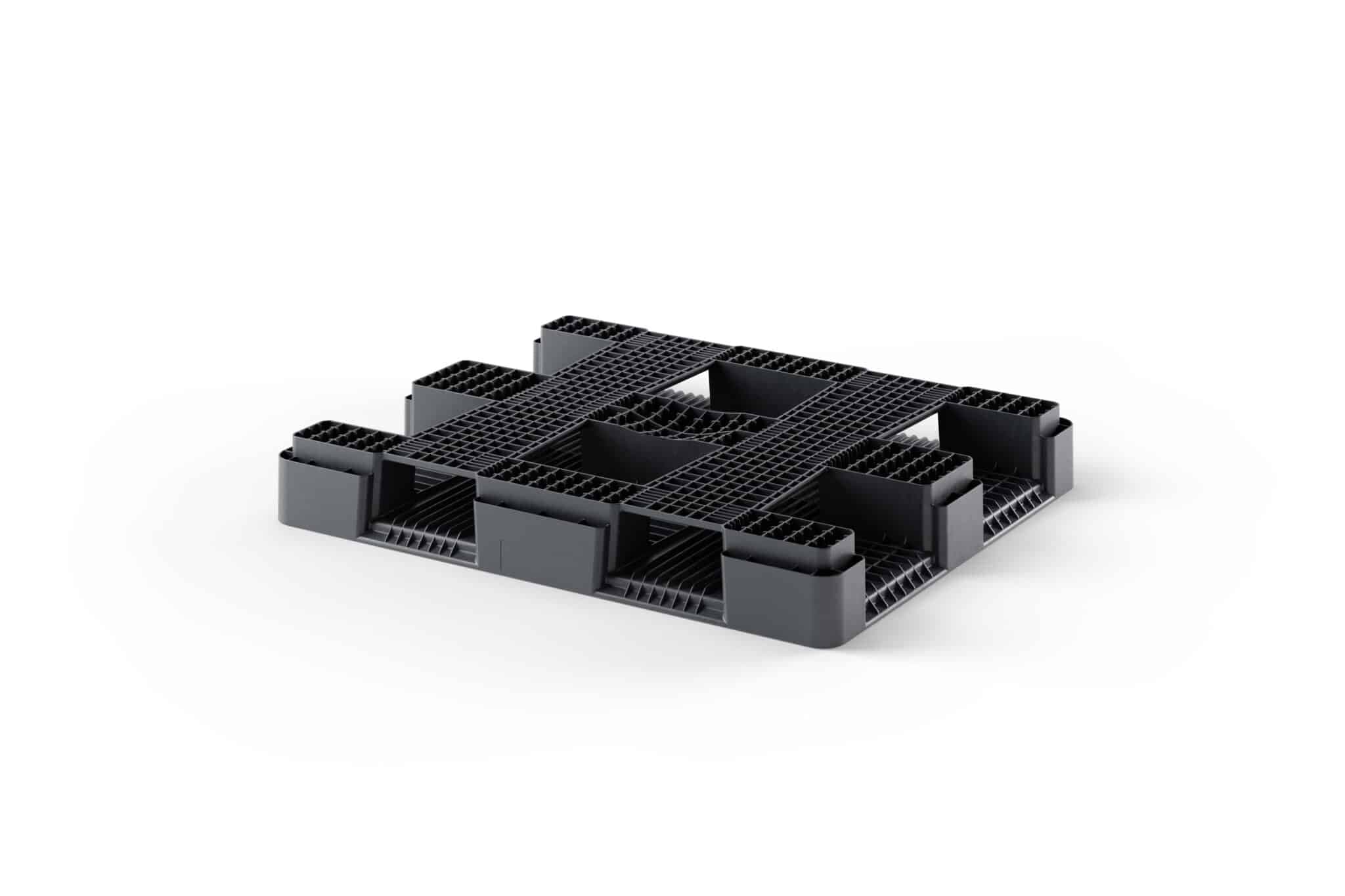
Cabka’s team worked closely with Red Bull to develop the BigBag S5 pallet — a purpose-engineered recycled plastic pallet designed specifically around the demands of Big Bag transport. The solution addressed the stacking problem at its root: by providing a rigid, load-bearing deck that transfers the weight of stacked units through the pallet structure rather than through the Big Bag fabric below, the S5 enables safe double stacking without any risk of damage to the bag or its contents.
This single design breakthrough unlocked a shift from 40-foot to 20-foot ISO containers — a more compact format that, combined with the double-stacking capability and the pallet’s optimised footprint of 1,150 × 950 × 150 mm, allows Red Bull to extract significantly more payload value from each container voyage.
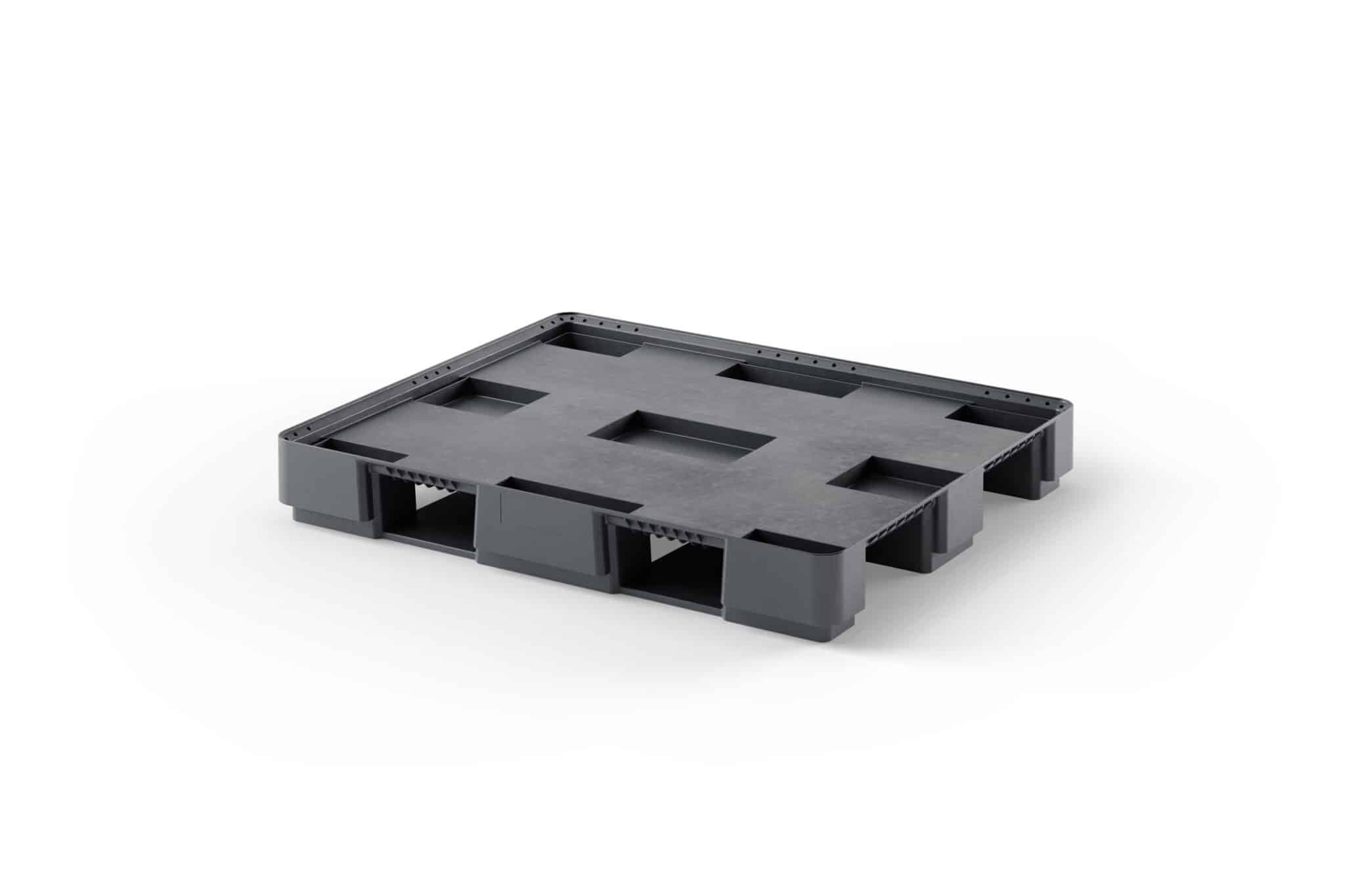
Key features of the BigBag S5 pallet include:
- Safe double stacking — the deck design centres and supports Big Bag loads so units can be safely stacked on top of each other, maximising vertical use of container space without risking fabric damage
- Optimised for 20-foot ISO containers — the pallet’s dimensions (1,150 × 950 × 150 mm) are calibrated to make maximum use of available floor space within a standard 20-foot container
- 100% recycled plastic construction — manufactured from post-consumer and post-industrial recycled plastic, and 100% recyclable at end of life, with Cabka recovering used pallets as feedstock for future production
- Exceptional stability for double-stacked loads — extra-wide skids provide a stable base that prevents shifting or tipping during sea transport and handling
- Four-way entry and roller conveyor compatibility — enabling efficient handling at both loading and unloading points, regardless of facility configuration
- Forklift damage protection — reinforced entry tunnel design protects the pallet and its load from damage during forklift handling
- Closed-loop reuse system — pallets travel between Red Bull’s Austrian and U.S. facilities on a continuous reuse cycle, replacing one-way wooden pallets entirely and eliminating the associated procurement and disposal costs
The Results
The BigBag S5 pallet has transformed the economics and environmental footprint of Red Bull’s transatlantic ingredient supply chain:
- 20% reduction in container shipments — by enabling double stacking and optimising 20-foot container utilisation, Red Bull now moves the same ingredient volumes with significantly fewer voyages, directly cutting freight costs and maritime carbon emissions
- One-way wooden pallets eliminated entirely — the shift to a reusable closed-loop system removes the recurring cost and waste of single-use pallets on every transatlantic shipment
- Zero damage to Big Bag contents — the purpose-built deck design and double-stack stability have eliminated the quality risk previously associated with attempting to stack flexible bulk containers
- A functioning closed loop between Austria and the USA — pallets circulate continuously between Red Bull’s facilities, with end-of-life units returned to Cabka for recycling into new production, closing the material loop entirely
- Measurable progress toward Red Bull’s sustainability targets — fewer container voyages, zero single-use wooden pallets, and a fully recyclable reusable asset combine to deliver real, reportable reductions in supply chain emissions and waste
Key Takeaways
- Solving one structural problem unlocks cascading efficiencies: Enabling safe Big Bag stacking was the single design breakthrough that made everything else possible — smaller containers, fewer shipments, and a 20% freight reduction. The right engineering insight can reshape an entire logistics model.
- Container format matters as much as container fill: Switching from 40-foot to 20-foot ISO containers, enabled by the S5’s optimised dimensions and double-stack capability, was a key driver of space efficiency — a reminder that the choice of container is as important as what goes inside it.
- Reusable replaces disposable — at every stage of the journey: Eliminating one-way wooden pallets on a transatlantic route compounds savings with every cycle. What looks like a small per-unit saving becomes highly material across thousands of annual shipments.
- A closed loop is an asset, not just a sustainability claim: By designing the return journey into the solution from the outset — with pallets cycling continuously between Austria and the U.S. and returning to Cabka for end-of-life recycling — the partnership turns packaging from a cost centre into a managed, circular asset.
Connect
Contact us
Download our product brochure
Enter your email and we will send you our product catalog and corporate brochure